
Canning and Freezing, Choosing, Storing, Cooking Green Beans, Questions & Answers
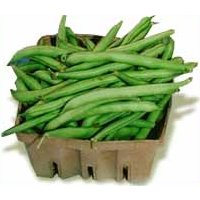
We're
all about the green beans.
There is nothing that can quite match the taste of farm fresh green beans. Sure,
the prep time is a bit longer than if you were opening a can or using a bag out
of the freezer, but it's a real treat and one I like to take advantage of since
the season only lasts for a few months of the year. I think it's a joy to cook
with the freshest ingredients I can find.
We
often get asked "how many servings is in a pound of green beans?"
One pound of fresh green beans trimmed yields approximately 3 cups raw. One pound
of fresh green beans trimmed and cooked yields about 2 cups.
What
nutritional value do green beans have?
Green beans are an excellent source of vitamin C, vitamin K and manganese. They
are a good source of vitamin A and an excellent source of vitamin C, and 3/4 of
a cup of is only 25 calories.
How
can I tell if the beans are fresh?
It's
very easy to tell if green beans are fresh. They will feel fleshy and firm. Buy
the freshest and plumpest beans you can find. When you break them they should
have an unmistakable fresh "snap" to them. If
you see green beans that are limp and have a wrinkled appearance to them avoid
them, they're not fresh.
How
do I store fresh green beans?
When
you bring your fresh green beans home don't wash them. This can cause them to
develop black spot and spoil. They will keep in the crisper drawer in your refrigerator
for three to four days with no problem. Don't wash them until you're ready to
cook them. When you're ready to use them run them under cold running water to
rinse any dirt off and drain them.
What's the best way to cook fresh green beans?
Before
you decide how to cook your green beans consider their age. Very young and tender
green beans, or what are true "haricots verts" should be used in recipes
where blanching is all that is called for. More mature green beans can handle
longer cooking times.
Freezing and Canning Green Beans
From time to time I get interesting questions from visitors about how to freeze and can green beans. Some are people with experience who have something new happen during the process, and some have never frozen or canned fresh green beans before.
Since some of you may have the same questions I decided that I'd post these questions and answers here. Hopefully it will help you.
I
am far from an expert when it comes to this subject, my expertise comes from "trial
and error" over the years. When I am not certain about the answer to a question
I go to "experts" for the answers. Credit is given to the source.
I'm
a first timer,,,,,,when I freeze the beans, I do not blanch them. They go directly
from the garden to the freezer after I wash and trim them of course. What does
blanching do, and why is it necessary?
Green beans
can be frozen, dried or canned. Immature beans retain more color and undergo less
texture and flavor loss during freezing. All vegetables must be blanched before
freezing. Unblanched vegetables quickly become tough and suffer huge nutrient
and color loss. Vegetables naturally contain an active enzyme that causes deterioration
of plant cells, even during freezing. Blanching before freezing retards the enzyme
activity.
Freezing does
not improve the quality of any vegetable. Freezing actually can magnify undesirable
characteristics. For instance, woodiness in stalks become more noticeable upon
thawing. Select vegetables grown under favorable conditions and prepare for freezing
as soon after picking as possible. Vegetables at peak quality for eating will
produce best results in the freezer.
Source:
http://urbanext.illinois.edu/veggies/beans1.html
I
canned my first batch the other day. I followed the Ball Blue Book instructions,
hot pack, used a spatula to remove any visible air bubbles, and left 1 inch head
space. After pressure canning when I had put the beans on a towel to cool I could
see all the beans letting out air bubbles from the inside of the beans. After
24 hours I checked all lids are sealed, there was no leakage. My only concern
is that now liquid level is lower inside the jars with some beans exposed. It
is as if the liquid displaced the air that was inside the cut beans and risen
to the top. Have you ever heard of this happening? Is this a normal thing?
Loss
of liquid does not cause food to spoil, though the food above the liquid may darken.
As long as the jars were processed in the canner for the specified amount of time
and they sealed, they should be fine. If, however, the loss is excessive (for
example, if at least half of the liquid is lost), refrigerate the jar(s) and use
within 2 to 3 days. Sometimes after processing, some of the liquid in the jar
is lost and doesn't cover the product. Lost water is most common when pressure
canning, especially with starchy foods. Typical causes and solutions are: Packing
the food too tightly or loosely in the jar.
Starchy foods, such as corn,
peas or lima beans, absorbed all the liquid. Use more liquid with these starchy
vegetables.
Air naturally entrained within the fruit or vegetable that
wasn't released (generally this happens more with raw pack than hot pack)
All
bubbles were not removed from the jar before capping.
The jars filled
too full (too much vegetable/fruit compared to the amount of liquid).
In
pressure canning: Fluctuating pressure in the pressure canner. Let pressure return
to zero gradually, avoiding the sudden release of pressure through the vent. Do
not hasten the cooling with cold water.
In water bath canning: The jars
are not totally covered with boiling water during the boiling water bath processing.
Source: http://www.pickyourown.org/canningqa.htm
Tasty & Easy Green Bean Recipes
Armenian Green Beans with Ground Meat and Tomatoes (Fassoulia)
Blanched
Green Beans
Cream
of Green Bean Soup (Company's Coming)
Fried
Green Beans
Dilly Green Beans
Recipe - Canning Recipe
Ginger Garlic Green
Beans
Greek Green Beans
Greek
Potatoes and Green Beans
Green
Bean Soup (Company's Coming)
Green
Beans a'la Waterman's
Green Beans Almondine
Green Beans Almondine (with a hint of lemon)
Green Beans Almondine (with an Asian flair)
Green Beans Almondine (with mushrooms)
Green
Beans and Prosciutto Pasta Salad
Green Bean
Casserole (Campbell's)
Green Bean Casserole
(Cook's Illustrated)
Green
Beans, Endive & Boston Lettuce Salad
Green
Beans in Sour Cream & Tomato Sauce
Green
Beans Provençal, Chef Simone Beck
Green
Beans Provençal, Cooking Light
Green
Bean Salad, Dill, Parsley & Savory
Green
Bean Salad, Feta & Pecans
Green
Bean Salad, Soy Glazed Almonds, Cilantro
Green
Beans with Coconut
Green Beans with Ginger
Butter
Green Beans with Onion Paste (Madhur
Jaffrey)
Green Beans
with Roman Mustard
Green
Beans with Shallots
Italian Green Beans (St.
Anna Beans)
Lemon Green Bean & Celery Salad
Oven Roasted Green Beans
Pears
with Green Beans & Bacon
Persian
Green Beans & Rice (Lubia Polo)
Sautéed
Green Beans with Hazelnut Crumbs
Sesame &
Portobello Green Beans
Sicilian Green Bean & Fennel Salad (Cooking Light)
Stir-Fried Green Beans with Pork & Chilies
Sweet & Sour Green Beans
Thai
Green Beans (Cooking Light)
Three
Bean Salad Recipe
White Bean,
Green Bean & Red Bell Pepper Salad
|
|
|
